

If you are managing procurement for a modern recreational facility, athletic club, or municipal park, understanding what lawn bowls are made of is essential for making smart, long-term inventory investments. While a casual spectator might see a simple, polished sphere rolling across a grass green, a commercial buyer sees a highly calibrated piece of industrial engineering. Unlike standard sports balls that rely on pressurized air or simple rubber cores, lawn bowls require extreme structural stability, precise density distribution, and absolute resistance to environmental wear.
Lawn bowls are primarily manufactured using advanced high-density composite phenolic resins or heavy polymers, though premium legacy models were traditionally shaped from dense tropical hardwoods like Lignum Vitae. For venue operators and wholesale buyers, recognizing the material science behind these spheres is the key to choosing inventory that resists cracking, maintains its built-in bias over decades of friction, and delivers maximum lifetime value for your facility.
What Is the Material Evolution from Natural Timber to Modern Synthetics?
The manufacturing history of lawn bowls is a masterclass in industrial material evolution. As player performance demands increased and manufacturing technologies advanced, the industry completely shifted its sourcing pipeline away from organic materials.
The Legacy Standard (Lignum Vitae): For centuries, premium bowls were turned from Lignum Vitae ("tree of life"), an incredibly dense, heavy wood native to the Caribbean and northern South America. While renowned for its natural weight and durability, timber possessed a major commercial liability: it was highly susceptible to atmospheric moisture, causing the wood to split, warp, or lose its precision shape over time.
The Modern Standard (Phenolic Resin): Today, natural wood has been entirely phased out of commercial production. Modern manufacturers utilize premium composite phenolic resins-the same heavy-duty, heat-resistant synthetic compounds used to manufacture industrial gear wheels, electrical insulators, and professional billiard balls.
The Polymer Alternative: Some high-volume manufacturers also utilize specialized, ultra-impact-resistant polymers. These synthetic materials allow for automated injection-molding processes, delivering absolute consistency across massive production runs.
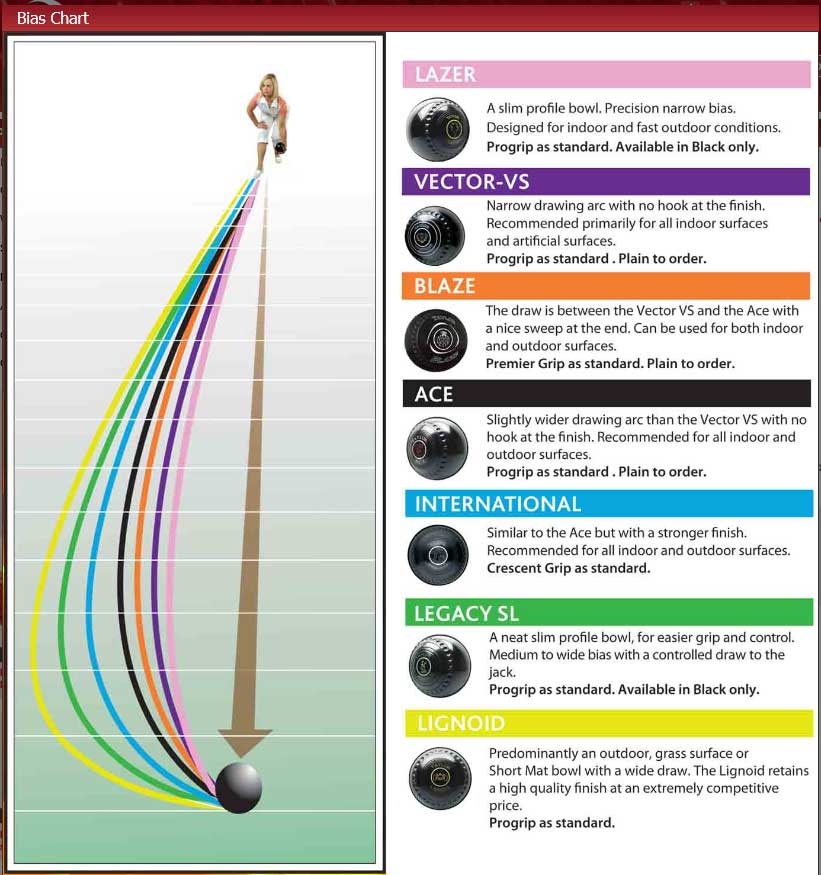
Different types of lawn bowls
What Are the Technical Properties of High-Density Phenolic Resin?
To understand why phenolic resin completely dominates the commercial market, facility procurement managers must evaluate its distinct chemical and mechanical properties. This material is chosen because it excels in high-stress, high-frequency commercial rental environments.
1. Exceptional Mass and Uniform Density
Phenolic resin is naturally dense, allowing manufacturers to hit the precise weight parameters required by international sports federations without needing to insert artificial lead weights or hollow chambers. The material distributes mass perfectly across the entire sphere, which is crucial for maintaining the bowl's engineered trajectory.
2. High Tensile Impact Resistance
During a competitive match, bowls routinely collide at high velocities. Phenolic resin possesses an incredibly high impact threshold, meaning it can absorb these structural shocks without chipping, fracturing, or developing micro-cracks that ruin the bowl's smooth rolling surface.
3. Total Environmental Impermeability
Unlike wood, synthetic resin is entirely non-porous. It does not absorb water when played on wet morning grass, it will not warp when subjected to extreme mid-summer heat, and it resists the UV degradation caused by continuous outdoor exposure.
How Does the Industrial Manufacturing Process Shape a Professional Bowl?
The production of modern resin bowls is a highly controlled, multi-stage manufacturing sequence that transforms raw chemical compounds into precision-molded sports equipment. This process relies on automated machinery to eliminate human error and achieve perfect symmetry.
1. High-Pressure Compression Molding
The manufacturing loop begins with granulated phenolic compound or liquid resin polymers. These raw materials are loaded into heavy industrial steel molds and subjected to extreme heat and compression. This process cures the chemical chains, creating a solid, hyper-dense blank sphere that is completely free of internal air pockets or structural voids.
2. Precision CNC Turning and Profiling
Once the blank block has fully cured and cooled, it is transferred to computer numerical control (CNC) lathes. These automated lathes execute pre-programmed paths to cut the exact asymmetrical outer profile of the bowl. The computer controls the cutting blades to a tolerance of fractions of a millimeter, carving out the exact structural contour that gives the bowl its bias.
3. Diamond Polishing and Surface Texturing
After profiling, the bowl undergoes intensive mechanical polishing. Using progressively finer diamond abrasive pastes, automated arms buff the resin surface to a flawless, mirror-like gloss finish. For sets that require extra tactile feedback, a separate laser-etching or mechanical engraving cell adds dimpled grips, concentric circular rings, or customized commercial branding logos onto the sides of the sphere.
How Does Material Composition Impact a Bowl's Trajectory and Bias?
The exact material compound used during the molding process directly determines how a bowl behaves on the turf. In lawn bowls, the ball is deliberately shaped to be asymmetrical, creating a built-in trajectory curve known as the "bias."
Because the bias is achieved by shaving or weighting one side of the sphere differently than the other, even a microscopic defect in the material compound will ruin the shot. If a manufacturer uses a low-grade plastic that contains internal air bubbles or uneven chemical cooling lines, the center of gravity shifts unpredictably. High-density phenolic resin ensures that the material cures with absolute structural uniformity, allowing precision CNC lathes to cut the exact asymmetrical profile required. This ensures that every bowl in a matched set curves along an identical, predictable path.
What Are the Testing and Calibration Protocols for Official Certification?
Before any production batch can be distributed to commercial facilities or used in sanctioned events, the bowls must undergo rigorous verification testing. The world governing authority, World Bowls, enforces a strict set of testing criteria that every manufacturer must legally satisfy.
1. The Table Test Protocol
Every official testing station utilizes a perfectly calibrated, sloped testing table covered in smooth felt or billiard cloth. The newly manufactured bowl is rolled down this ramp alongside an official "Working Standard" master bowl. The path of the new bowl must mirror the trajectory curve of the master bowl within an incredibly tight tolerance window. If it curves too sharply or fails to track wide enough, the material profile is rejected.
2. Weight and Sizing Audits
Testing technicians use ultra-precise digital scales and calipers to verify that each bowl in a matched four-bowl set matches its siblings perfectly. The weight variance between the individual bowls in a retail or facility set cannot exceed mere fractions of a gram, ensuring that players experience zero balance discrepancies when switching units mid-match.
What Are the Material Specification Standards for Competitive Play?
When sourcing inventory for a commercial venue, buyers must ensure their gear complies with international manufacturing standards. Purchasing non-compliant gear can disqualify your facility from hosting official regional or national tournaments.
To help your procurement team cross-reference structural specs during your next volume order, check out how modern synthetic compounds align with official sport regulations:
| Material Property Vector | World Bowls Official Standard | Commercial Material Realization | Venue Operational Benefit |
| Diameter Range | 112mm to 134mm | Controlled via high-precision CNC molding tolerances | Fits a wide array of customer hand profiles comfortably. |
| Maximum Weight | Cannot exceed 1.59 kg (3.5 lbs) | Achieved naturally through high-density resin compounding | Eliminates the need for unstable internal weighting elements. |
| Surface Finish | Smooth or gripped, completely uniform | High-gloss diamond polished or laser-etched dimples | Provides excellent grip for players while resisting dirt and grass stains. |
How Do Facility Climate and Storage Conditions Affect Synthetic Resin?
While modern composite phenolic resins are exceptionally stable compared to legacy wooden options, commercial facility operators must still implement proper climate-control storage protocols. Understanding how synthetic materials interact with ambient environments prevents premature weathering and protects your asset investment.
1. Mitigating Thermal Contraction and Expansion
Extreme thermal swings can stress any synthetic material. If bowls are left overnight in an uninsulated outdoor equipment shed during freezing winters, and then immediately rolled onto a hot synthetic green the next morning, the rapid temperature jump can cause micro-fractures in the polished outer shell. Storing inventory in a climate-controlled environment maintains material stability.
2. Preventing Chemical Contamination
Phenolic resin possesses high chemical resistance, but it can be damaged by prolonged exposure to harsh industrial solvents, high-concentration chlorine, or petroleum-based cleaning agents often found in maintenance garages. Equipment lockers should be kept separate from turf fertilizer and chemical storage areas to avoid surface pitting or discoloration.
Why Is Sourcing Modern Synthetics Essential for Venue Longevity?
For a commercial sports venue, country club, or resort, purchasing gear made of modern composite resin is a pure asset-protection strategy. While cheaper, low-density plastic bowls exist for backyard recreational play, stocking them in a commercial environment is a costly operational mistake.
1. Drastic Reduction in Replacement Cycles
Cheap plastics scratch easily when they contact subsurface gravel, sand, or perimeter ditch materials. Once a bowl's surface is heavily scratched, it creates friction on the turf, ruining the green and forcing the facility to replace the set. Premium phenolic resin bowls are virtually scratch-proof, allowing them to remain in active rental service for decades.
2. Low-Maintenance Facility Operations
Resin bowls require almost zero maintenance. Unlike legacy wooden bowls that needed to be regularly stripped, re-oiled, and buffed with specialized waxes to prevent drying out, modern synthetic bowls only need a simple wipe-down with a damp micro-fiber cloth to remove grass oils between group bookings.
Why Modern Material Science Is Driving the Growth of Sports Venues?
The shift to advanced synthetics has transformed lawn bowls (Reference: https://en.wikipedia.org/wiki/Lawn_bowls) from a delicate, weather-dependent hobby into a highly scalable, low-overhead commercial attraction. Because modern resin bowls can withstand heavy, continuous daily impacts without losing their structural integrity or precise path calibration, facility owners can run back-to-back corporate events, tournament flights, and casual public bookings with absolute confidence.
By investing in high-density phenolic resin gear, venue operators protect their initial capital expenditure, streamline day-to-day operations, and provide their clientele with a premium, consistent, and completely reliable playing experience.


