

If you are a commercial sports facility developer, country club general manager, or municipal park director, scaling your venue's social and competitive programming requires a proactive approach to risk management. While lawn bowls is widely recognized as a non-contact, low-impact sport, operating a public or corporate hospitality facility introduces distinct premises liabilities, property hazards, and liquor-related exposures.
Establishing comprehensive insurance coverage and structural risk-mitigation protocols is essential for protecting your venue's financial health, ensuring compliance with local municipal codes, and maintaining low annual premium rates.
What Types of Insurance Coverage Does a Commercial Lawn Bowls Venue Require?
Navigating commercial insurance policy structures requires a clear understanding of the specific exposure vectors inherent to sports entertainment venues. A robust risk-mitigation package relies on several layered coverage policies:
Commercial General Liability (CGL): Serves as your primary defense against third-party bodily injury and property damage claims occurring on venue grounds. Standard policies should maintain minimum limits of $1,000,000 per occurrence and $2,000,000 general aggregate, covering slips, trips, falls, and spectator injuries along the rink margins.
Liquor Liability Insurance: Essential for any venue combining corporate event packages, food service, and bar sales with active play. Standard CGL policies routinely exclude alcohol-related incidents. Dedicated liquor liability covers alcohol-fueled property damage, vehicular accidents, or personal injuries involving over-served guests.
Commercial Property & Equipment Coverage: Protects the physical infrastructure of your facility-including synthetic green membranes, laser-leveled sub-bases, electronic scoreboards, perimeter fencing, and high-density composite house gear-against fire, severe weather, vandalism, or water main ruptures.
Umbrella / Excess Liability: Provides high-limit protection (typically $5,000,000 to $10,000,000+) above underlying CGL, commercial auto, and liquor liability caps, safeguarding large commercial complexes against catastrophic litigation judgments.
Directors & Officers (D&O) Liability: Critical for private sports clubs and non-profit facility boards, shielding leadership from claims related to financial mismanagement, discriminatory membership policies, or breach of fiduciary duty.
Workers' Compensation Insurance: Mandatory coverage protecting groundskeepers, maintenance technicians, bar staff, and event coordinators from work-related injuries, covering medical bills and lost wages.
What Are the Primary Premises Liability Risks on the Green?
Understanding where physical accidents occur allows facility directors to engineer risks out of the environment before an incident triggers an insurance claim.
1. Perimeter Ditch and Plinth Hazards
The structural boundary surrounding a green-specifically the recessed ditch (typically 50mm to 200mm deep) and the adjacent bank (rising at least 230mm above the green surface level)-represents the single highest trip-and-fall exposure point on the property. Guests transitioning between the elevated bank walkway and the sunken playing surface frequently misstep, leading to joint and soft-tissue injury claims.
2. Moisture and Turf Surface Slippage
Natural grass greens treated with morning irrigation, as well as synthetic turf surfaces damp from rain or spilled beverages, present slipping hazards. Without specified footwear mandates and high-traction walkway mats, venues face elevated slip-and-fall claims from both casual bowlers and venue staff.
3. Alcohol-Assisted Property Operations
When bare-foot or casual social bowling is combined with food and beverage service, dropped glassware, slick aluminum cans, and liquid spills on perimeter decking rapidly multiply liability vectors.
4. Low-Light Navigation During Evening Corporate Events
Venues that run night leagues or evening corporate parties face increased slip-and-fall exposures if perimeter walkways, transition ramps, and scoreboards lack uniform, glare-free illumination.
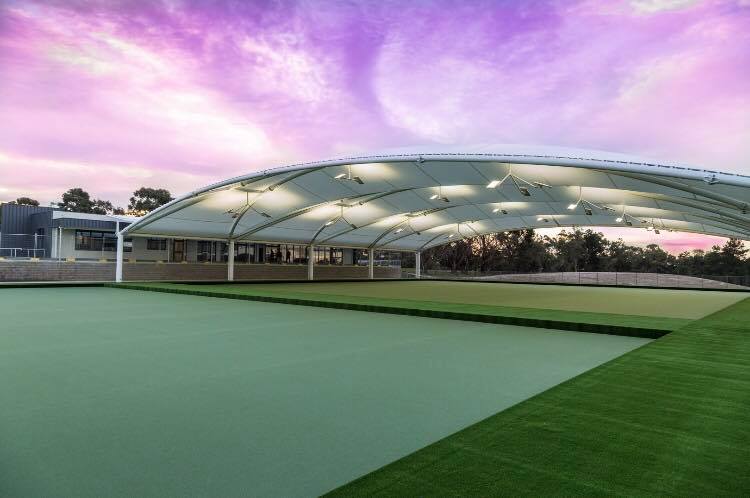
Lawn bowls court
What Physical Safety Standards Help Lower Venue Insurance Premiums?
Insurance underwriters evaluate commercial facilities based on their physical risk controls. Implementing standardized engineering measures directly lowers your operational risk score and reduces annual policy premiums.
To assist your risk-management team in auditing facility readiness, align your physical infrastructure with these commercial standard practices:
| Physical Risk Vector | Mandatory Engineering Control | Venue Risk-Mitigation Benefit |
| Ditch Edge Visibility | High-contrast, non-slip rubber edging on all plinths | Dramatically reduces misstep misjudgments along rink margins. |
| Perimeter Drainage | Integrated subsurface slot drains with flush grates | Eliminates standing water pooling on surrounding concrete or timber decking. |
| Facility Footwear Rules | Enforced smooth, flat-soled shoes or designated barefoot zones | Prevents turf tearing while reducing ankle instability and trip risks. |
| Lighting Uniformity | LED fixtures delivering 80+ lux with minimal glare profiles | Eliminates dark shadows along step-downs during night corporate events. |
| Glass-Free Play Zones | Mandatory polycarbonate or aluminum drinkware on the green | Prevents shattered glass hazards on turf surfaces and perimeter ditches. |
What Protocols Control Liquor Liability and Guest Safety?
For venues where bar service drives significant bottom-line margin, liquor risk management must be integrated directly into day-to-day operations to protect your commercial license and insurance standing.
1. Responsible Beverage Service (RBS) Certification
Every bartender, server, and event coordinator must complete mandatory state-approved server training (e.g., TIPS or RAMP certification). Staff should be trained in passive intervention-identifying signs of intoxication early and cutting off service before guests attempt to access the playing area.
2. Designated Beverage Containment Zones
Establish clear structural barriers between dining/drinking areas and the active turf. Enforcing strict "no glass on the green" rules reduces both physical injury hazards and chemical contamination of synthetic turf fibers.
How Do Contractor Hold-Harmless Agreements Protect the Venue?
When hosting third-party events, hiring outside caterers, or bringing in independent event organizers, your venue must prevent vicarious liability from shifting onto your balance sheet.
Certificates of Insurance (COIs): Require every outside vendor, contractor, or corporate host to submit a COI naming your venue as an Additional Insured on a primary and non-contributory basis, with minimum liability limits matching your standard facility terms.
Indemnification and Hold-Harmless Clauses: Every facility rental contract must contain robust indemnification language, ensuring the third-party client legally holds your business harmless against damages, liabilities, or legal fees resulting from their guests' actions.
How Do Waiver Strategies Protect Revenue During Corporate Group Bookings?
For venues scaling their corporate event packages, implementing modern liability waiver workflows is a mandatory operational layer.
1. Digital Waiver Integration
Relying on paper sign-in sheets creates storage clutter and audit vulnerabilities. Integrating digital waiver sign-offs directly into your online booking software ensures that every participant completes an electronic release before stepping onto the turf.
2. Clear Scope of Release Terms
Waivers must explicitly detail the inherent risks of sports participation, including surface transitions, footwear conditions, and projectile risks from moving bowls. Clearly worded assumption-of-risk language provides defense counsel with immediate grounds for summary dismissal in non-negligence injury disputes.
What Are the Essential Components of a Facility Emergency Action Plan (EAP)?
In high-gravity litigation, courts evaluate whether a facility demonstrated a standard of care during an emergency. A complete Emergency Action Plan (EAP) protects both lives and legal standing.
AED Placement and CPR Training: Automated External Defibrillators (AEDs) must be installed in highly visible, central locations near the rinks, with at least one CPR/AED-certified staff member on site during all operating hours.
Unobstructed Emergency Access Points: Designated ambulance access routes must remain clear of parked vehicles, equipment carts, or outdoor dining furniture at all times.
Severe Weather Interruption Protocols: Establish strict, automated lightning-detection and severe weather evacuation procedures to clear outdoor greens immediately when storms approach.
How Should Facilities Manage Injury Claims and Incident Documentation?
A commercial insurance policy is only as strong as your daily operational documentation. In the event of an injury claim, insurance adjusters and legal teams will audit your venue's historical maintenance logs and employee incident reports.
1. Standardized Incident Reporting
Train all staff members to complete a standardized incident form within 60 minutes of an event. The report should capture exact timestamps, weather and lighting conditions, photos of the physical area, witness contact details, and precise notes on any first aid administered.
2. CCTV Video Preservation
Maintain a digital surveillance system covering all rink margins, transition steps, and bar areas. Require managers to immediately archive and back up raw video footage following any reported incident to prevent video overwriting and refute inflated injury claims.
Why Is Ongoing Staff Training Essential for Insurance Compliance?
A proactive risk-management strategy relies on continuous staff reinforcement. Conducting quarterly safety audits, reviewing EAP protocols, and logging daily turf inspections shields your facility from frivolous claims, keeps premium rates predictable, and protects your capital investment over the long haul.


